The History
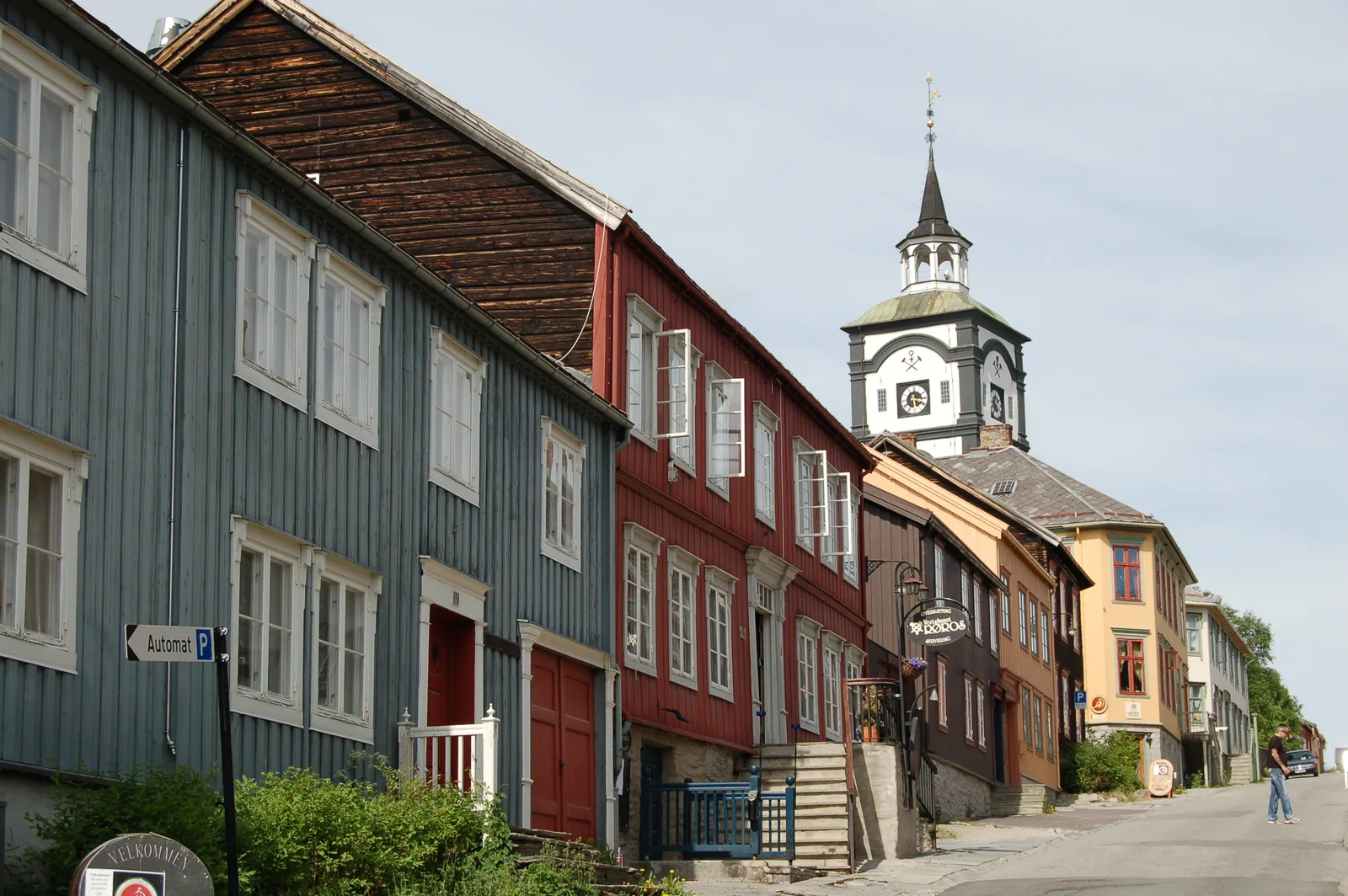
Røros grew around copper rather than a castle or a royal court. Copper ore was discovered in 1644, and the first smelter followed in 1646. Workers arrived for paid employment, but they also established farms: houses, barns and outbuildings formed a settlement where mining and agriculture supported one another. Much of the seventeenth-century street pattern survives, alongside wooden buildings from the eighteenth and nineteenth centuries. Røros Museum
Swedish troops destroyed the town in 1679, after which it was rebuilt. Its industry depended on a much larger landscape: forests supplied fuel, farms provided food, and transport routes connected mines and smelters. The “Circumference” was the privileged resource area granted to the copper works by the Crown. Mining continued for 333 years, ending with the company’s bankruptcy in 1977. UNESCO inscribed the town in 1980 and expanded the property in 2010 to include more of this connected industrial landscape. UNESCO
The imposing church, completed in 1784 during the company’s prosperous years, provides another surviving expression of copper wealth. These are documented milestones; no discovery legend is presented here as fact. Church history
Five Reasons to Visit
- Walk Kjerkgata and the old town. Join the museum’s town walk to understand the relationship between wooden homes, working yards and the mining economy. Town tour
- Explore Smelthytta. The museum stands on the ruins of the last smelter, which burned in 1975. Exhibitions cover copper production and regional clothing, with English audio guides available. Museum
- Step inside Røros Church. Its 1,600-seat interior offers a striking contrast to the modest streets outside; church admission is included in the museum’s town tour. Church visits
- Head to Hummelfjell. Around 15 minutes away by car, the Os mountain area offers summer walking and cycling, plus winter cross-country and downhill skiing when conditions allow. Local tourism guide
- Taste the dairy traditions. Look for Rørosmeieriet butter, sour cream, tjukkmjølk cultured milk and skjørost cheese. Kaffestuggu is a named town-center stop for sandwiches and baking; menus vary. Local food
When and How
My pick is June–August for a first visit combining town walks with outdoor time; choose winter specifically for snow activities. Trondheim is a practical hub, with the train journey to Røros taking roughly 2½ hours. Check dated connections through Entur and confirm seasonal attraction access. Getting there
Researched feature, not a firsthand travel report. Travel details reflect the research date; confirm access and transport before setting out.

.jpg)


