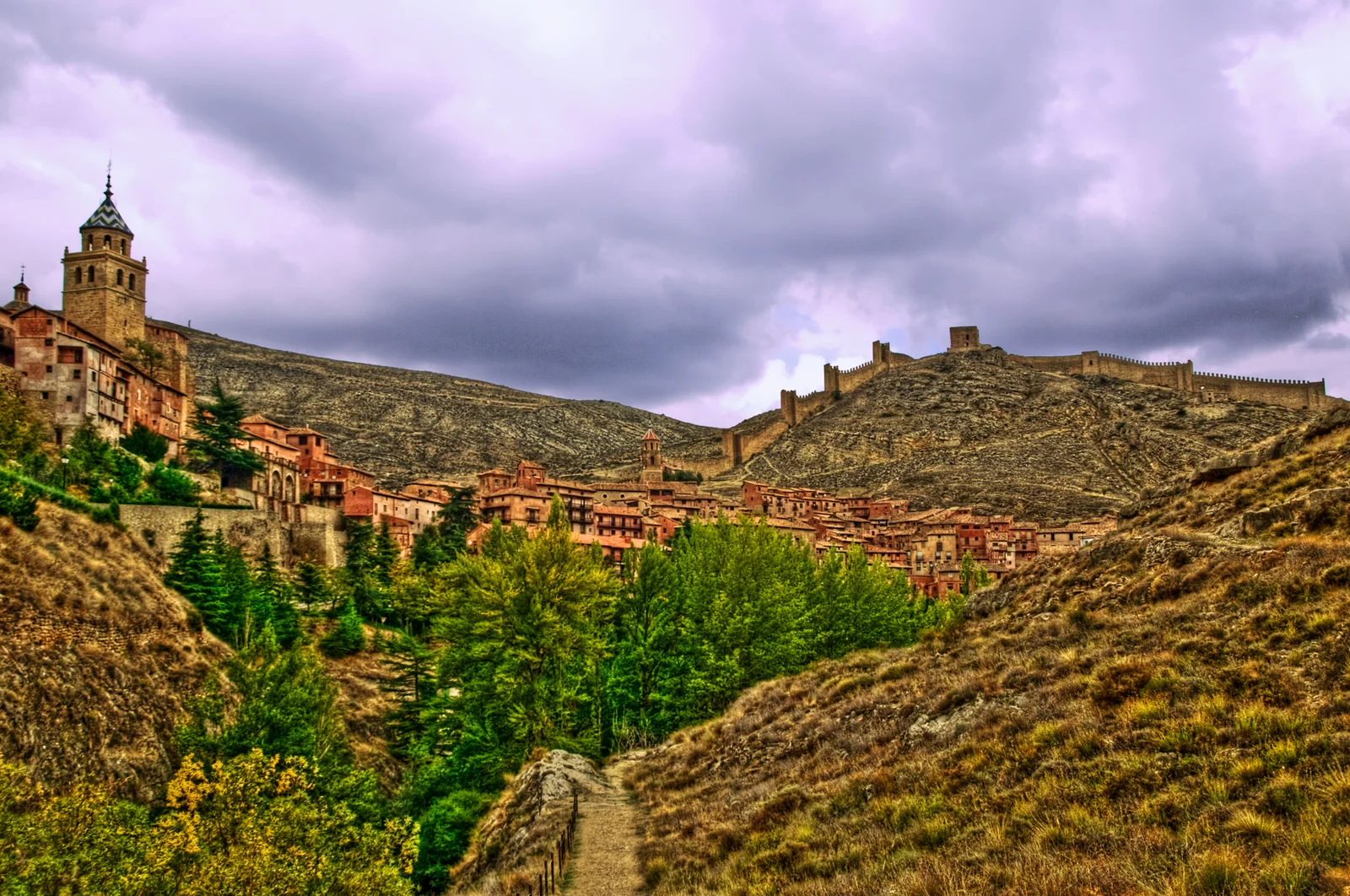
The History
Albarracín’s medieval identity grew under Muslim rule, when the Banu Razin family governed the settlement and gave it its name. Surviving defenses, including the Andador tower and portions of the walls, preserve evidence of this period. In the twelfth century, the town passed to the Christian Azagra family, whose lordship retained considerable independence. Pedro III of Aragón captured Albarracín in 1284, although its subsequent incorporation into the Crown was a longer process rather than a single clean transition. Aragón heritage record · Municipal history
The town is not simply a medieval time capsule. Its cathedral underwent substantial sixteenth-century alterations, while later prosperity produced mansions, civic buildings and an episcopal palace with a Baroque façade. The historic ensemble received national protection in 1961; conservation helps explain the coherence visitors see today. Heritage record
One attractive story deserves a warning label: the blue Navarro de Arzuriaga house supposedly gained its color to please an Andalusian bride. The municipality explicitly rejects that tale, identifying the color as traditional Aragonese indigo and finding no such bride among the relevant marriages. Here, the documented explanation is more revealing than the legend. Municipal account
Five Reasons to Visit
- Plaza Mayor and Calle Azagra: explore irregular façades, projecting upper stories and finely worked balconies. Look for the blue Navarro de Arzuriaga house. Town walking guide
- The walls and Andador tower: appreciate how the defenses follow the steep terrain. View them from town or use designated approaches rather than assuming every wall section is walkable. Heritage overview
- Cathedral and Episcopal Palace: add religious architecture and the Diocesan Museum to the streetscape; confirm current visiting arrangements before arrival. Monuments and museums
- Paseo Fluvial: follow the river bend for a different perspective on the town’s rocky setting. Expect a walking route, not an entirely level urban promenade. Municipal guide
- Pinares de Rodeno: combine red-sandstone scenery and pine woods with prehistoric rock-art sites, including Toros del Navazo. Follow marked routes and respect protective barriers. Cultural park
Eat and Plan
Look for migas, sheep’s or goat’s cheese, lamb dishes and almojábanas pastries. Seasonal mushroom dishes also feature in the local food tradition. Municipal food guide
My first-visit pick is late spring or early autumn for walking; pack layers for this mountain setting. Teruel’s bus station is the nearest practical public-transport gateway. The municipal page lists a Monday–Saturday connection, none on Sundays or holidays; confirm dates and the return journey before booking. A car gives more flexibility for Rodeno. From Valencia, the municipality estimates roughly two hours by road. Getting there
Researched feature, not a firsthand travel report. Travel details reflect the research date; confirm access and transport before setting out.


.JPG)

