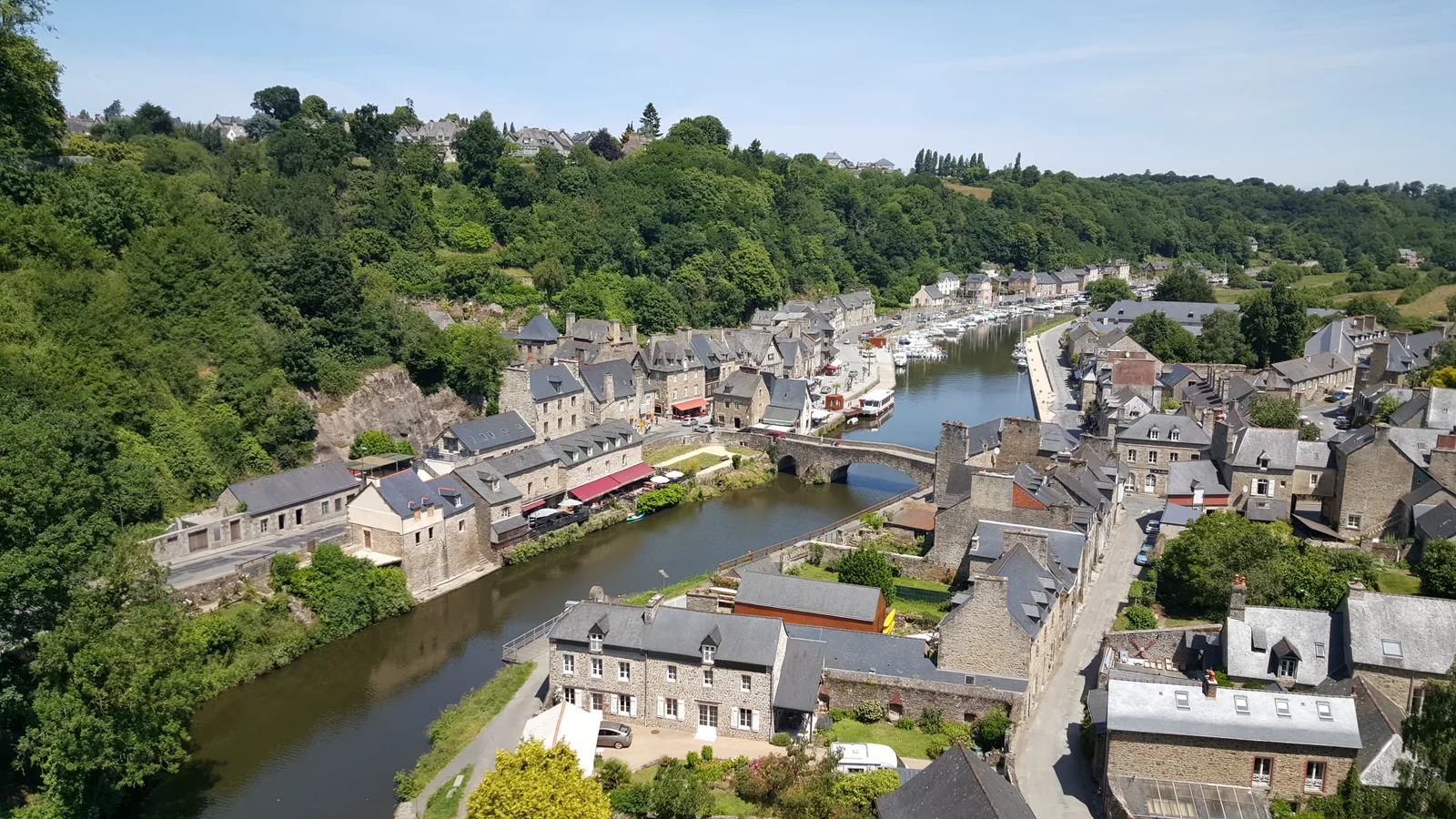
The story
Dinan first appears in a written record in 1040, when its founding lord, Josselin, witnessed a donation to an abbey. Its prosperity came from a useful position on the Rance: the port connected river traffic with maritime trade, while the bridge generated toll income. Early commercial links reached England and Flanders, and cloth production and trading later became central to the town’s economy. Municipal history.
Wealth needed protection. The surviving enclosure developed under the dukes of Brittany from the late thirteenth century, with a ducal keep added around 1380. Later defensive improvements accommodated artillery. These walls were working infrastructure, repeatedly adapted as warfare changed. Brittany heritage inventory.
Inside, prosperous residents built the timber-framed houses that still give the streets their character. The clock tower expressed municipal ambition alongside the duke’s castle and church towers. Nineteenth-century transport changed the town again: the viaduct opened in 1852, and the railway arrived in 1879. Commercial activity gradually gave way to services and tourism. Dinan’s present appearance therefore reflects centuries of rebuilding and adaptation, rather than a town preserved unchanged from one medieval moment. Municipal history.
Five reasons to visit
- Rue du Jerzual and Rue du Petit-Fort: follow the historic route between town and port, through the Jerzual gate, browsing workshops along the way. Expect steep cobbles.
- Château de Dinan: explore a ducal residence through displays about princely daily life and medieval warfare.
- The Rance towpath: descend to the port, then continue beside the water for a quieter walk beyond the streets. These three experiences are described by Dinan’s tourism office.
- Yvonne Jean-Haffen’s artistic world: La Grande-Vigne preserves the painter, illustrator, and ceramicist’s home and studio. Plan around its seasonal access: the advertised 2026 exhibition ended September 27, so an October interior visit is not confirmed. City museum page.
- A Breton crêperie lunch: Crêperie du Roy, on Rue de la Lainerie, lists buckwheat galettes and sweet crêpes, including salted-butter caramel. Official restaurant listing.
Taste and timing
Try a buckwheat galette, followed by a salted-butter caramel crêpe. Cider is another regional specialty; nearby producers include the Val de Rance cellars in Pleudihen-sur-Rance. Regional food guide.
My pick is late spring or early September, particularly for walking and seasonal museums. Rennes is a practical rail gateway: use the TER BreizhGo journey planner for connections to Dinan and check the chosen departure’s changes and duration. Official rail route.
Researched feature, not a firsthand travel report. Travel details reflect the research date; confirm access and transport before setting out.


%20(2).jpg)
.jpg)

