Stone lanes, wooden clogs and an autumn bowl
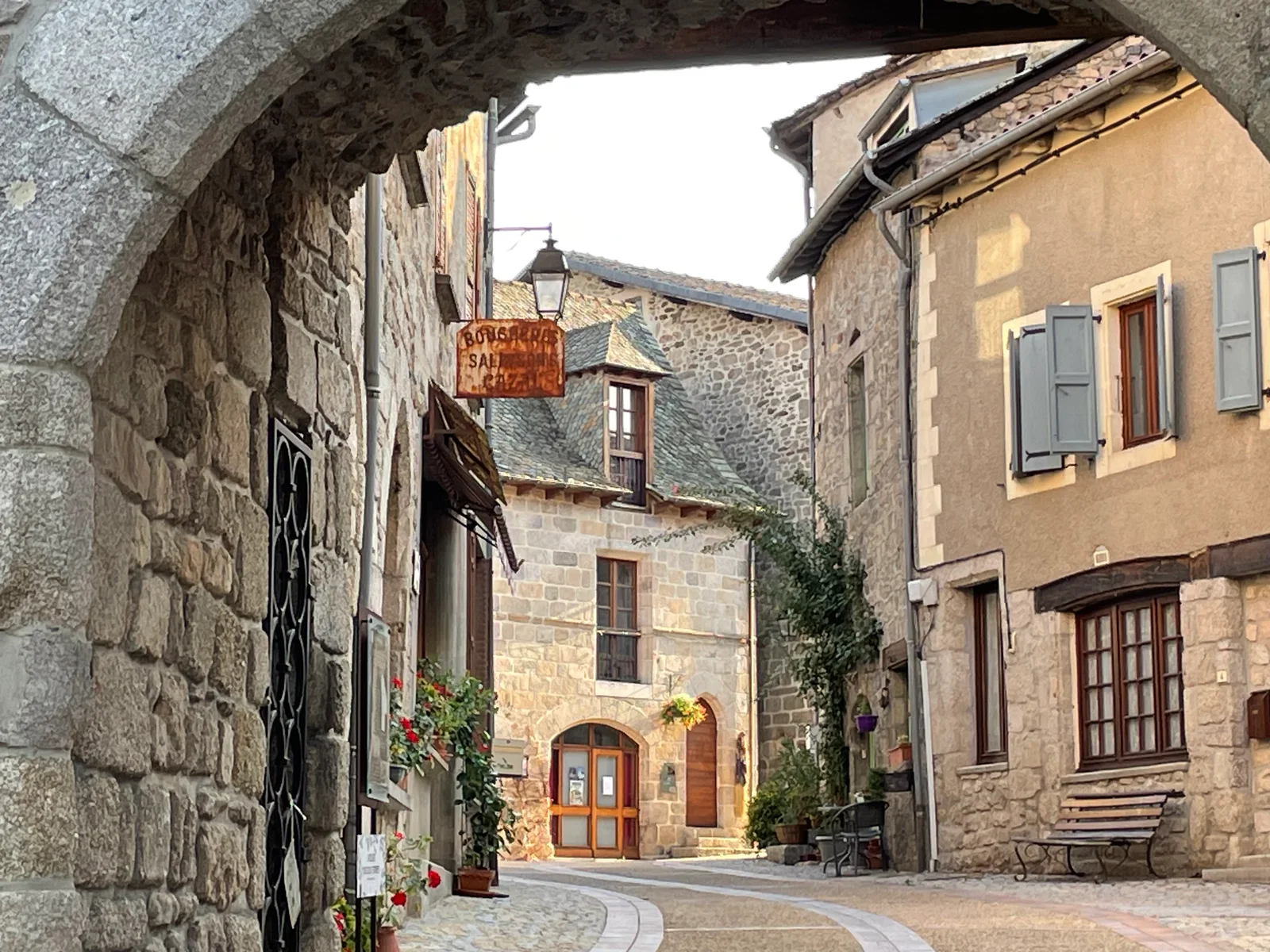
In the Châtaigneraie of south-west Cantal, Marcolès rewards a slow look: a gate frames a street, a side lane reveals a church, and a workshop keeps an old craft in motion. On Saturday 24 October 2026, the village adds its first Fête de la Soupe. Official autumn programme
The History
The departmental tourism authority traces Marcolès to a tenth-century Benedictine priory. Houses gathered around it, forming a small defensive settlement; by the twelfth century the village was fortified. Its two surviving gates, Portail-Haut and Portail-Bas, still anchor the Rue Longue. Cantal Destination
The municipality describes a stronghold during the wars with the English, followed by a prosperous sixteenth-century trading town on the route between the Auvergne mountains and the south. Its built record remains readable: granite houses occupy the old rampart line, mullioned windows overlook the street, and vaulted cellars lie beneath merchants’ homes. The circular plan reflects the settlement’s defensive origins. Municipal history
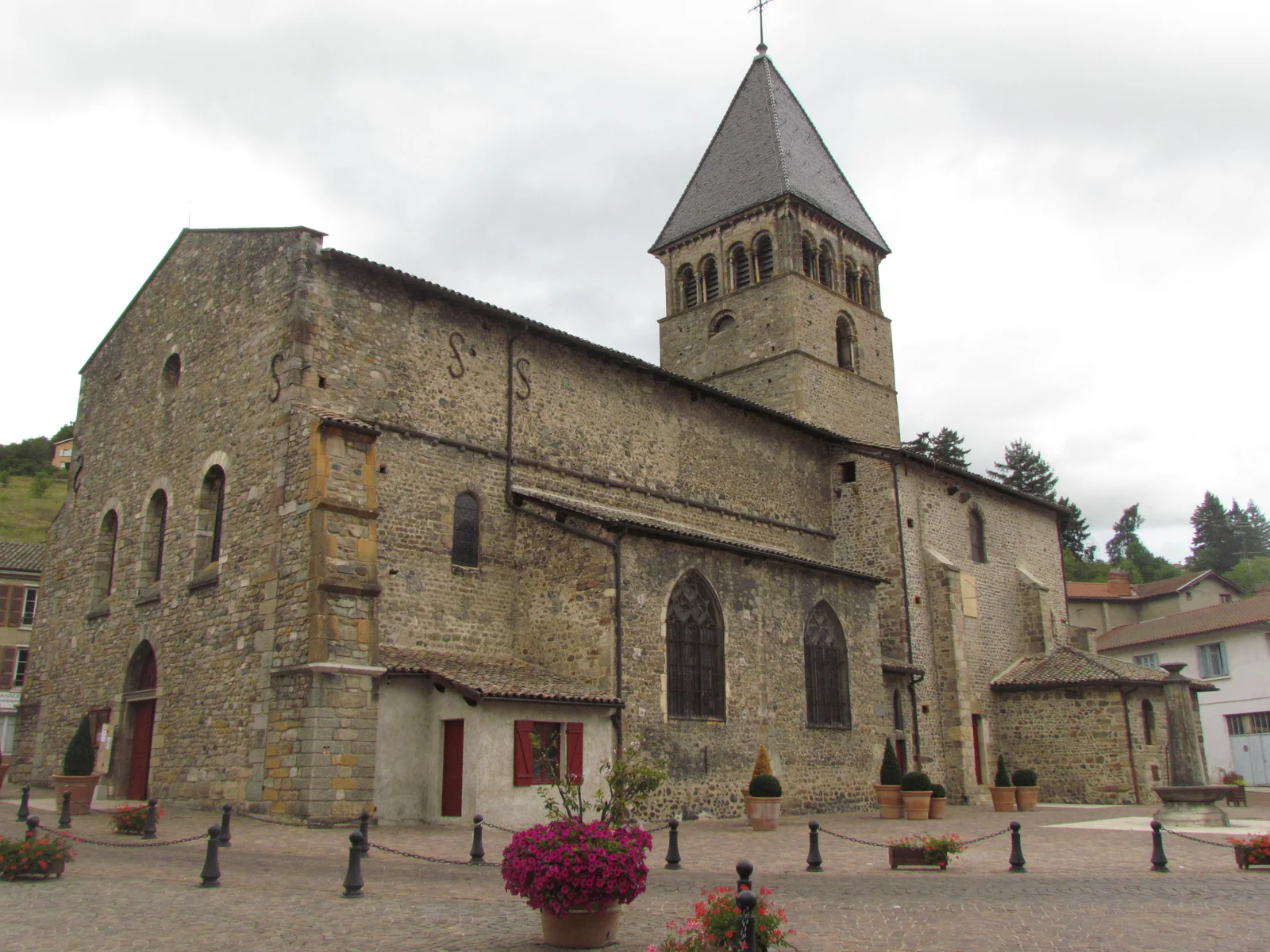
Saint-Martin church tells another part of that story. The present building dates from the fifteenth century; local families added eight chapels from 1442, seeking burial places, seats and commemorative masses. Later generations furnished the interior with seventeenth- and eighteenth-century Baroque work. The church’s scale and successive additions preserve evidence of the community that paid for it. Church heritage record
Five Reasons to Visit
- Follow Rue Longue between the gates. Look for stone window frames and the vaulted-cellar tradition described in the municipal heritage guide.
- Step into Saint-Martin. Its chapels, painted pulpit and decorated choir bring different periods together. Official church listing
- Turn into the carriérons. These narrow paved lanes retain their Occitan name; the tourism overview makes them part of the village walk.
- Explore the clog-making tradition. The historic saboterie and forge preserve old machinery; arrange autumn access rather than relying on the ended summer schedule. The separate Galoche du Cantal workshop-shop makes wooden-soled footwear today.
- Come for the first soup festival. Les Esclops plans homemade soups, storytelling, roaming music and a vote for a favourite bowl on 24 October 2026. Confirm the start time with the organiser: the tourism programme gives ambiguous timings. Official programme
Eat and Plan
The regional autumn programme celebrates chestnuts, buckwheat bourriols and truffade; these are Châtaigneraie food traditions, not promises about a particular restaurant’s menu. In Marcolès, Oxalis and La Table du Chef offer two dining formats, while Apis Terrae’s official listing introduces locally made honey wine and honey vinegar.
Late October suits the soup-festival visit; summer suits the village’s published guided-tour programme. Those summer sessions have finished for 2026. For an autumn workshop visit, contact the provider first. Village visits
Aurillac is a practical rail or air gateway; Maurs is another regional rail option. Arrange the final road transfer before setting out: the regional tourism access page lists gateways, not a confirmed through-service to Marcolès. The village tourism page identifies the An 2000 car park as a starting point for the heritage video and visits. No specific departure or driving time is promised.
Local Resources
Resources checked: 2026-10-17. These are researched listings, not firsthand recommendations. Website details were checked; availability and individual departures were not.
Start Here
- Mairie de Marcolès — The municipality’s local news and heritage entry point. Location: Marcolès. Visitor detail: links to the village history and plan; confirms both village heritage labels.
- Cantal Destination — Marcolès — Official overview for orientation and guided-visit enquiries. Location: village centre. Visitor detail: identifies the An 2000 car park and heritage video; group visits require arrangements.
See & Do
- Saint-Martin church — official heritage listing — Southern Gothic church with eight family chapels and later Baroque furnishings. Location: upper village. Visitor detail: the listing records free access, without a detailed daily timetable.
- Historic saboterie and forge — official listing — A 1925 clog workshop and a 1930s forge preserve working-life heritage. Location: Le Tustalou and Le Balat, Marcolès. Visitor detail: contact Les Esclops for autumn group arrangements; the displayed summer hours ended 31 August 2026.
- La Galoche du Cantal — A contemporary workshop-shop making galoches and clogs. Location: 6 rue de la Mairie, Marcolès. Visitor detail: its own site lists Tuesday–Saturday opening; confirm before a special journey.
- Fête de la Soupe — official tourism programme — Les Esclops’s first village soup festival. Location: the carriérons, Marcolès. Visitor detail: Saturday 24 October 2026; confirm the start time because the programme’s timing is unclear.
Eat & Drink
- Auberge de la Tour — restaurants — Oxalis serves the lunch format and La Table du Chef the evening format. Location: Place de la Fontaine, Marcolès. Visitor detail: the restaurant page lists Tuesday–Saturday service and cookery workshops by reservation; menus and places can change.
- Apis Terrae — official directory alternative — A Marcolès producer of mead and honey vinegar. Location: Rue Longue cave-boutique; producer address Le Cassagnol, Marcolès. Visitor detail: the tourism listing specifies appointments outside July–August; phone 06 59 22 49 50. The producer’s direct site was inaccessible during this check.
Stay Local
- Auberge de la Tour — hotel — A seventeenth-century granite residence adapted as a village hotel. Location: Place de la Fontaine, Marcolès. Visitor detail: its hotel page lists Tuesday–Saturday operation except annual leave; enquire about the intended dates.
- A La Clairière — hosts’ own site — A guesthouse in a house dated 1781. Location: countryside outside the bourg, described by the hosts as under 2 km from Marcolès. Visitor detail: the site also describes evening meals; arrange these directly. The old domain redirects to this host-operated blog.
Get Around
- Châtaigneraie tourism — regional access — Official gateway information for planning the approach to Marcolès. Location: regional stations including Aurillac and Maurs, outside the village. Visitor detail: lists rail and airport options; arrange onward transport separately and check dated operator information before travel.
Sources and photograph notes
The linked municipal history, church record, departmental tourism pages, current autumn programme and direct business pages support the feature. Coordinates are an approximate village-centre reference. Every listed resource was opened on 17 October 2026; checked websites do not guarantee opening or availability.
Six distinct Commons photographs show gates, lanes, the fountain, historic workshop machinery, a cross and village houses. Five date from August–September 2026; the Pline photograph dates from June 2014. They do not establish October conditions. Source pages, creators and exact licenses accompany the gallery. Resizing, WebP conversion and uncropped, white-padded social JPEG conversion retain the recorded licenses and ShareAlike terms.
No suitable reusable video was established with verified location, reuse and soundtrack rights. This is a photos-only feature.
Researched feature, not a firsthand travel report. Travel details reflect the research date; confirm access and transport before setting out.