Beaujeu: before the new wine flows
A Romanesque bell tower rises above Beaujeu’s tiled roofs, where a Renaissance courtyard, growers’ cellars and the coming Sarmentelles festival tell the story of the town that named Beaujolais.
Beaujeu lies in the Rhône department of Auvergne-Rhône-Alpes, north-west of Lyon. October is a useful planning moment: Les Sarmentelles runs 18–22 November 2026, within four weeks of this feature. The photographs below show earlier years, not this year's festival or today's vine colours.
The History
The name Beaujolais begins with the Lords of Beaujeu. The regional wine body's history identifies Bérard as a wine trader known around 957 and credits the dynasty with giving the region its name. Beaujeu remained its capital until Villefranche-sur-Saône replaced it in 1514.
The tourism office's heritage walk places the lords' fortress on Pierre Aiguë hill, overlooking a trading route between southern France and Paris. Their influence spread across the Saône and Loire country. In 1400, after the last lord left no direct descendant, Beaujolais passed to the Dukes of Bourbon.
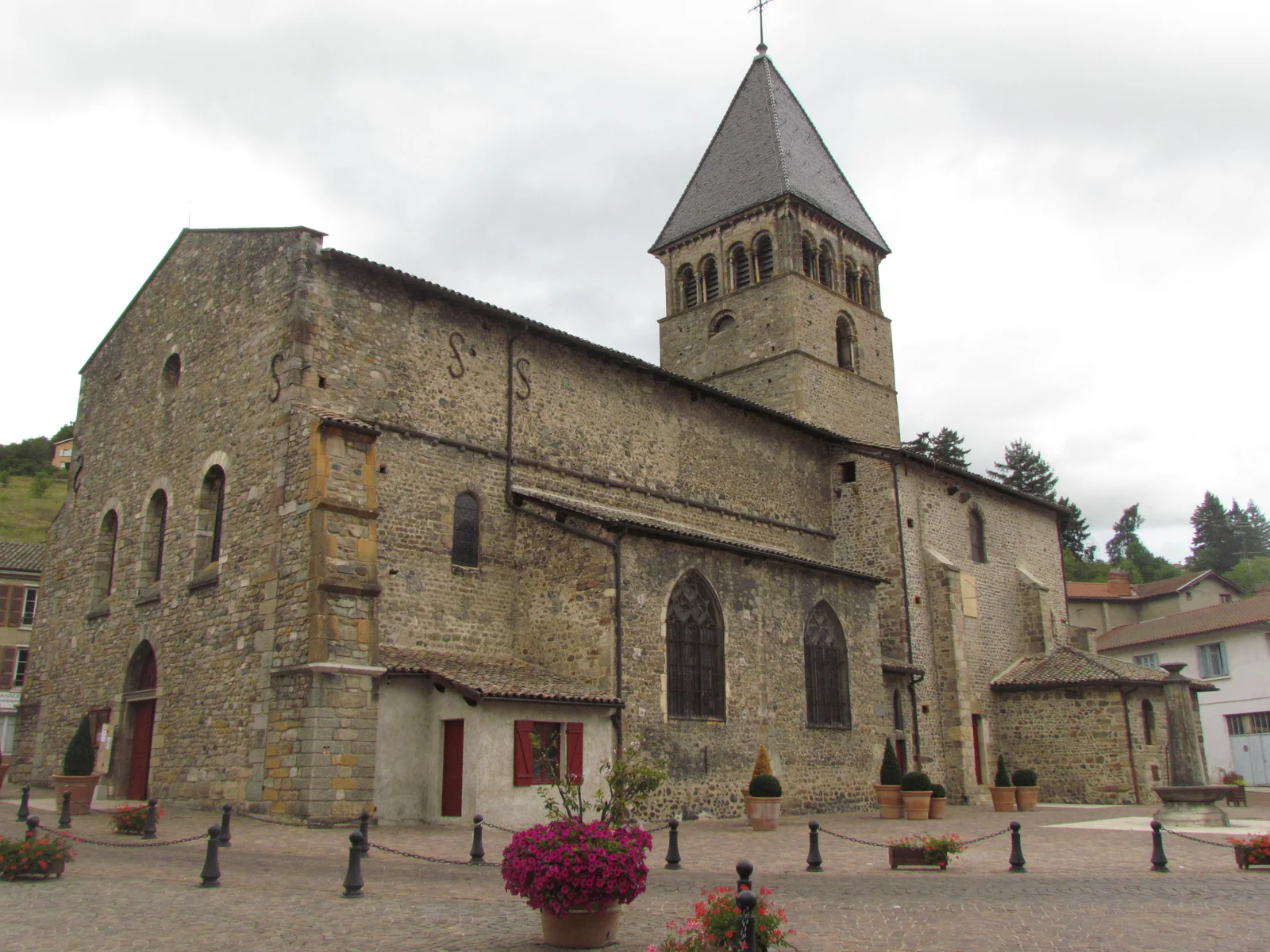
Below the fortress, Saint-Nicolas was consecrated by Pope Innocent II in 1132. The same guide recounts a mother's vow after her son's drowning as the church's foundation story; it explicitly presents this as legend. The castle's destruction began in 1611, while the collegiate church disappeared during the Revolution. Saint-Nicolas survives as the town's Romanesque landmark.
Wine also sustained a different institution. The Hospices estate's producer history traces its holdings to gifts from more than 250 benefactors since 1240, tying the vineyards to Beaujeu Hospital. That charitable history adds another layer to a town often encountered only through a wine label.
Five Reasons to Visit
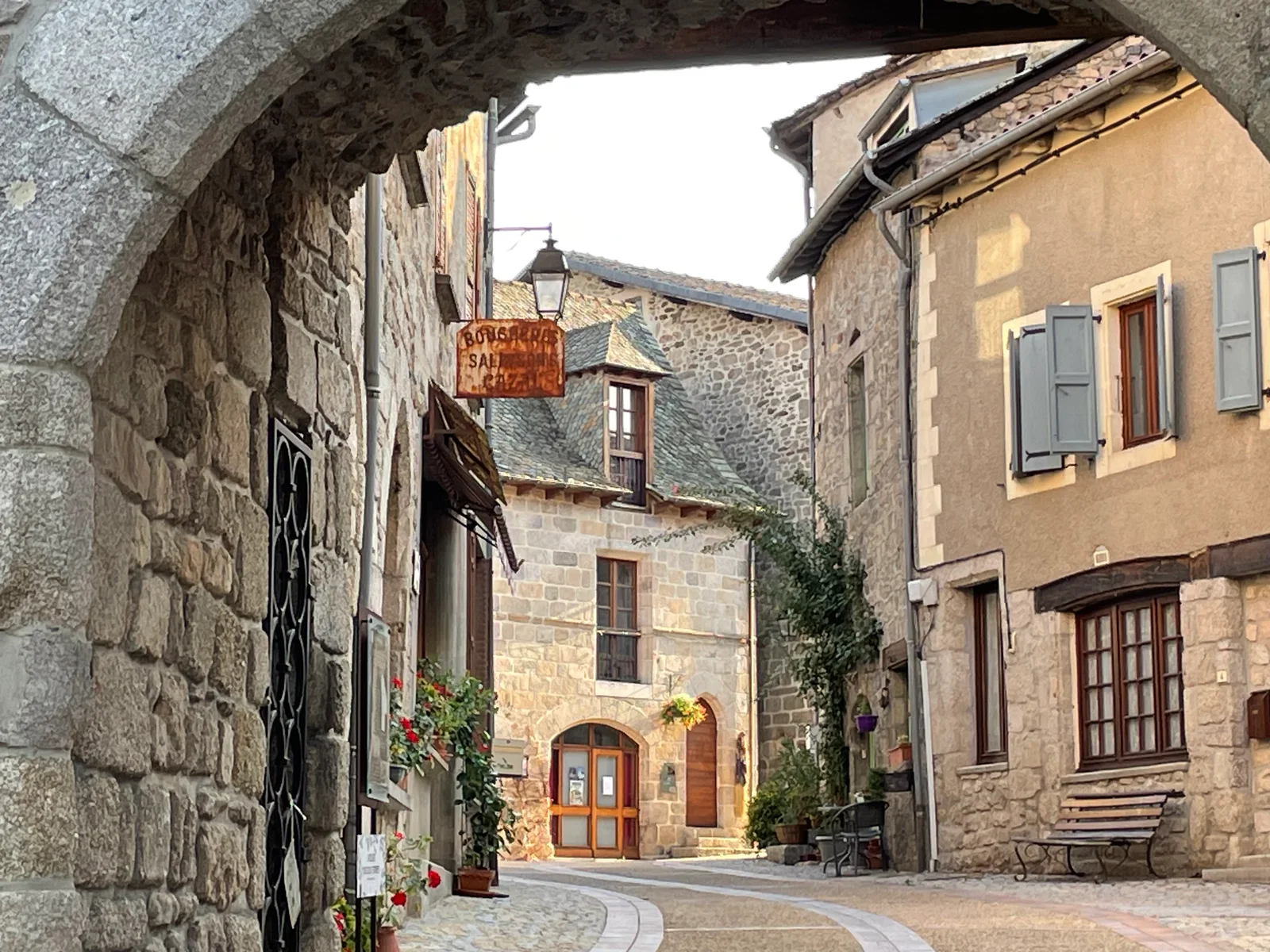
- Read the old town in stone and timber. Saint-Nicolas and the 14th- and 16th-century house beside the square anchor the official heritage walk. The church's Romanesque tower and the house's Renaissance courtyard make a compact introduction to Beaujeu's different eras.
- Plan for Les Sarmentelles. The organizer's 2026 programme spans five days, 18–22 November. Its opening-night parade, barrel-opening celebration and ball begin at 23:00 on 18 November; individual tastings and dinners have separate arrangements. Check the programme and reservations before travelling.
- Meet the wines through their growers. Le Comptoir Beaujolais describes itself as a growers' cellar founded in 1956, bringing together family domaines and independent winemakers. Its range includes Beaujolais-Villages, the crus and Crémant de Bourgogne.
- Cycle the greenway towards Belleville. The tourism office's route guide describes a 14 km route linking Beaujeu and Belleville-en-Beaujolais, also usable on foot. Bike hire is available at the Maison du Terroir. Connections through Belleville's centre share streets with traffic; plan the whole route, not just the greenway.
- Follow a wine-country circuit from town. The official Beaujeu circuit links the town with Lantignié, Régnié-Durette, Quincié-en-Beaujolais and Cercié. It is a way to connect the old capital with surrounding vineyard villages; arrange producer visits individually rather than assuming drop-in access.
Eat and Plan
Start with the wines: the Comptoir's own catalogue includes Gamay reds and Chardonnay whites from Beaujeu parcels, alongside other Beaujolais wines. For food, Le Bacchus is a town-centre bistro whose tourism listing describes weekday lunch dishes and a Saturday lunch formula including options such as omelette, cured ham and cheese. The Maison du Terroir brings together regional produce, wine and artisan goods. These are researched listings; no personal visit is implied.
Best season: autumn suits a wine-country visit and November's verified festival; spring offers another option for walking and cycling. Weather and vineyard colours vary. The nearby Maison de la Randonnée et du Trail at Col de Crie posts an autumn 2026 season ending on 1 November and annual closure from 2 November. Its visitor centre will therefore not be an open base during Sarmentelles.
Access: Lyon is the regional gateway. Plan a rail connection to Belleville-en-Beaujolais, then use TCL bus 235, whose operator page identifies the Beaujeu–Belleville route and a timetable valid from 24 August 2026 to 22 August 2027. Check connections for your own date; no individual departure, through ticket or journey time is promised. Vineyard visits beyond the bus route need separate transport planning.
Local Resources
Resources checked: 2026-10-25. These are researched listings, not firsthand recommendations. Websites were checked for the details below; room, table and transport availability were not checked. Official-directory alternatives are labelled.
Start Here
- Commune de Beaujeu — tourism — the municipality introduces the church, Renaissance house and town's wine-country setting. Location: Beaujeu town centre. Visitor detail: its page lists guided visits on 28 and 31 October 2026; contact the organizer for booking conditions and remaining places.
- La Maison du Terroir Beaujolais — a visitor exhibition, regional-produce shop, art displays and Renaissance courtyard explain the area's food and culture. Location: 24 Place de l'Hôtel de Ville, Beaujeu. Visitor detail: the centre also lists bike rental; confirm availability directly. Its website gives Sunday and holiday afternoon opening from 15:00 in this season.
- Les Sarmentelles — organizer's programme — the direct source for Beaujeu's five-day new-wine celebration. Location: Beaujeu centre and named festival venues. Visitor detail: 18–22 November 2026; parade, barrel-opening celebration and ball from 23:00 on the 18th. Separate events have their own tickets or reservations.
See & Do
- Saint-Nicolas and the heritage walk — official tourism map — a self-guided introduction to the church, historic houses and castle remains. Location: Beaujeu centre and Pierre Aiguë hill. Visitor detail: use the PDF for the town walk; its historical descriptions are useful, but its older event calendar is not the 2026 programme. No current church opening schedule was verified.
- Voie Verte du Beaujolais — official route guide — the 14 km cycling and walking route connects Beaujeu with Belleville-en-Beaujolais. Location: between the two towns. Visitor detail: the guide identifies hire points at Beaujeu's Maison du Terroir and Belleville's Hôtel-Dieu, and warns that the Belleville town-centre connection uses ordinary streets.
- Maison de la Randonnée et du Trail — route advice, maps and a picnic room make this a useful nearby walking resource. Location: Col de Crie, 1620 route de Beaujeu, Monsols, Deux-Grosnes, outside Beaujeu. Visitor detail: the autumn 2026 notice extends through 1 November, with Tuesday–Sunday opening during the Toussaint holidays; annual closure starts 2 November.
Eat & Drink
- Le Comptoir Beaujolais — an association of growers presents local wines in the historic capital. Location: 24 Square du Temple de Bacchus, Beaujeu. Visitor detail: its range covers Beaujolais-Villages, crus, whites, rosés and Crémant; contact the cellar to arrange the kind of tasting you want.
- Le Bacchus — official tourism listing — a Beaujeu bistro with lunch dishes and a Saturday lunch formula. Location: 16 rue de la République, Beaujeu, as listed by Destination Beaujolais. Visitor detail: the current listing says no restaurant service in the evenings or on Sundays; confirm before making plans.
- Hôtel Restaurant Le Mont Brouilly — its restaurant describes cooking from fresh ingredients and a wine list developed with Beaujolais growers. Location: Quincié-en-Beaujolais, outside Beaujeu. Visitor detail: its site lists dinner Tuesday–Saturday and Saturday lunch; check the current service and reserve directly.
Stay Local
- Chantemerle-en-Morne — Marie and Philippe's guesthouse occupies a former winegrower's home among Beaujolais-Villages vines. Location: 210 chemin de Morne, Beaujeu. Visitor detail: its own website lists three rooms, a table d'hôtes and a welcome for walkers and pilgrims; ask directly about your dates and meal arrangements.
Get Around
- TCL bus 235 — operator route and timetable — the practical public-transport link between Beaujeu and Belleville-en-Beaujolais. Location: the two towns and intermediate stops shown by the operator. Visitor detail: the linked timetable covers 24 August 2026–22 August 2027; check your date, stop and rail connection rather than assuming a fixed frequency.
Sources and Photograph Notes
History is supported by Inter Beaujolais, the official town-walk PDF and the Hospices producer history. Current festival dates come from the organizer, separate from the older calendar printed in the heritage PDF. The official Beaujeu wine-route circuit also locates the historic centre near 46.1546, 4.5871; these are approximate town-centre coordinates, not an entrance.
Six distinct archival photographs show the church, Renaissance house, rooftops, Saint-Jean chapel, Ardières and Rue de la République. The church image predates the 2020 tower restoration described in the heritage guide. No rights-cleared food, festival or wine-production photograph was established for this selection. No short video with independently verified location, reuse and soundtrack rights was established; this is a photos-only feature. Credits, original sources and exact ShareAlike licenses accompany every photograph.
Researched feature, not a firsthand travel report. Travel details reflect the research date; confirm access and transport before setting out.